
 EN
EN  English
 Français
 中文简体
中文简体


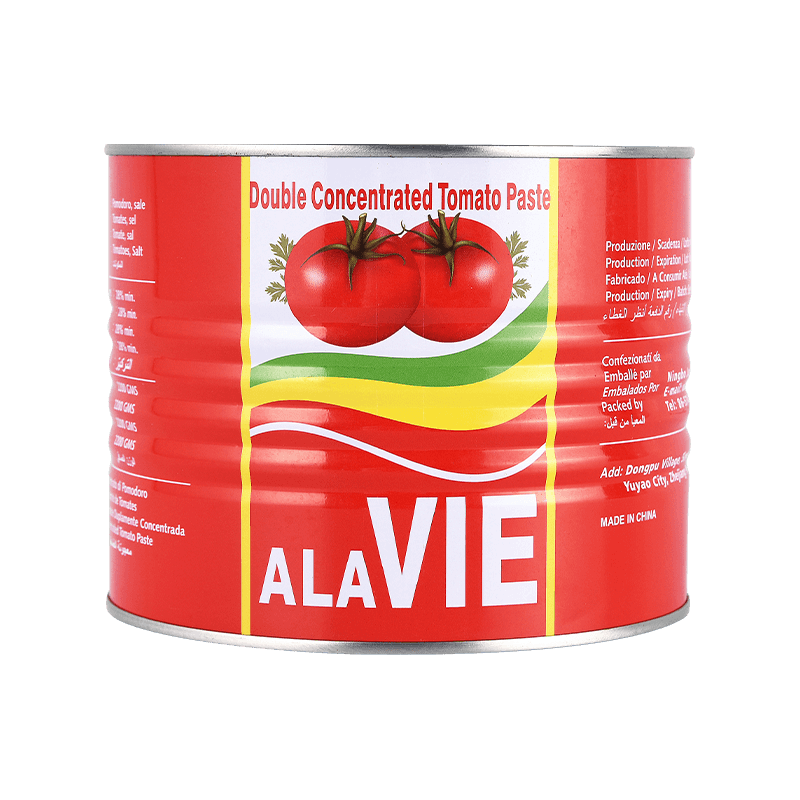
Tomato paste is significantly stronger than tomato puree in every measurable category: concentration of tomato solids, flavor intensity, viscosity, and nutritional density per ounce. The United States Department of Agriculture (USDA) and the Code of Federal Regulations define tomato paste as containing not less than 24% natural tomato soluble solids, while tomato puree falls between 8% and 23.9% solids. This fundamental difference means that one tablespoon of tomato paste delivers roughly three times the tomato solids of an equal amount of tomato puree. When a recipe demands a deep, long-cooked tomato flavor without adding excess liquid, paste is the stronger choice. This article presents a data-backed, detailed comparison of these two pantry staples, examining their processing, culinary roles, and nutritional profiles.
Content
- Defining Tomato Paste and Tomato Puree: Processing and Standards
- Tomato Solids Concentration: The Scientific Measure of Strength
- Flavor Intensity and Culinary Impact: When Stronger Matters
- Physical Properties: Viscosity and Moisture Content Comparison
- Nutritional Density: Concentrated Vitamins and Antioxidants
- Optimal Culinary Applications: When to Use Each Product
- Substitution Ratios and Practical Kitchen Conversions
- Frequently Asked Questions About Tomato Paste and Puree Strength
- Conclusion: The Definitive Answer on Which Is Stronger
Defining Tomato Paste and Tomato Puree: Processing and Standards
Tomato paste and tomato puree are both made from ripe tomatoes that have been cooked and strained, but the critical difference lies in the degree of water removal. The Food and Drug Administration (FDA) standard of identity, aligned with 21 CFR 155.191, establishes clear boundaries. Tomato puree is produced by concentrating tomato juice or strained tomatoes to a solids content of at least 8% but less than 24%. Tomato paste, on the other hand, is concentrated to 24% or higher, with many commercial products reaching 28% to 32% solids. This higher concentration is achieved through extended evaporation under vacuum at temperatures between 65°C and 75°C, preserving color and flavor while removing water. The result is a dense, spoonable product that is often packaged in small cans or tubes to minimize oxidation.
The production of tomato puree involves a shorter cooking and evaporation time, yielding a pourable liquid with a consistency slightly thicker than tomato sauce. Some manufacturers add salt or citric acid, but the base product remains a moderately concentrated tomato base. The USDA National Nutrient Database confirms that per 100 grams, tomato paste contains roughly 5.5 to 6.0 grams of natural tomato sugars, while tomato puree contains 2.8 to 3.5 grams, further evidencing the concentration difference. Understanding these definitions is essential to evaluating which product is stronger in any culinary context.
Tomato Solids Concentration: The Scientific Measure of Strength
The concentration of natural tomato soluble solids (NTSS), measured in degrees Brix, is the objective standard for determining the strength of tomato paste versus tomato puree. A 2023 industry analysis from the Tomato Products Wellness Council reported that the average Brix value for U.S. retail tomato paste is 28 degrees, compared to 10 to 12 degrees for standard tomato puree. This means that for any given weight, paste provides approximately 2.5 to 3 times more tomato material. When a recipe requires a robust tomato backbone, this disparity becomes the decisive factor. For example, achieving the flavor equivalent of 2 tablespoons of paste would require roughly 6 tablespoons of puree, introducing significant extra liquid that could alter a dish's texture.
The concentration also affects acidity and sweetness balance. Tomato paste has a lower pH (typically 4.0 to 4.3) compared to puree (4.2 to 4.5), due to the concentration of naturally occurring citric and malic acids. This higher acidity contributes to paste's ability to brighten flavors in long-braised dishes. The soluble solids include not just sugars and acids, but also glutamates—the amino acids responsible for the savory umami taste. Research published in the Journal of Agricultural and Food Chemistry in 2019 quantified that tomato paste contains up to 0.35% free glutamate by weight, nearly triple the 0.12% found in diluted tomato puree. This glutamate concentration is a key reason chefs consider tomato paste a powerful flavor amplifier.
Flavor Intensity and Culinary Impact: When Stronger Matters
Tomato paste delivers a cooked, caramelized tomato flavor that is immediately assertive, while tomato puree provides a fresher, more diluted tomato taste. The intense flavor of paste comes from the Maillard reactions that occur during prolonged cooking and concentration, creating complex flavor compounds such as furaneol and methional. In a 2021 sensory study conducted by the University of California, Davis, taste panels rated the umami intensity of a 28 Brix paste at 7.8 on a 9-point scale, compared to 3.4 for a 10 Brix puree. This data confirms that the "stronger" designation is both chemically and sensorially valid.
The culinary consequence is that tomato paste is typically used in small quantities—1 to 3 tablespoons—to build a flavor foundation, as in Italian soffritto, Spanish sofrito, or Middle Eastern stews. It is often sautéed in oil before adding liquids to unlock its fat-soluble flavor compounds and deepen its color. In contrast, tomato puree is used in larger volumes as a primary liquid component in soups, pasta sauces, and braises where a milder tomato presence is desired. Substituting one for the other without adjusting liquid content and seasoning will lead to dishes that are either bland or overpowering. The strength gap is not merely a matter of preference; it changes the fundamental balance of a recipe.
Physical Properties: Viscosity and Moisture Content Comparison
The table below directly compares the physical and compositional characteristics of tomato paste and tomato puree, drawing on USDA Agricultural Research Service data and industry standards. These metrics underline why paste is considered the stronger product across all quantitative parameters.
| Property | Tomato Paste (28 Brix) | Tomato Puree (10 Brix) |
|---|---|---|
| Tomato soluble solids (%) | 24% to 32% | 8% to 12% |
| Water content per 100g | 66 to 72 grams | 88 to 92 grams |
| Viscosity (Bostwick, cm/30s) | 1.0 to 3.0 (very thick) | 9.0 to 14.0 (thin, pourable) |
| Calories per 100g | 82 to 92 kcal | 32 to 38 kcal |
| Lycopene content per 100g | 25 to 45 mg | 9 to 16 mg |
| pH value | 4.0 to 4.3 | 4.2 to 4.5 |
Table: Physical and chemical comparison between standard retail tomato paste and tomato puree, sourced from USDA FoodData Central and the Tomato Products Wellness Council 2023 report.
Nutritional Density: Concentrated Vitamins and Antioxidants
Because tomato paste removes a large fraction of water, it concentrates all nutrients—including lycopene, vitamin C, potassium, and folate—making it nutritionally stronger per gram than tomato puree. Lycopene, the carotenoid antioxidant associated with reduced risk of certain cancers and cardiovascular disease, is present at levels up to 45 milligrams per 100 grams in paste, compared to a maximum of about 16 milligrams in puree, according to the USDA Nutrient Database. A 2022 review in the journal Nutrients confirmed that the bioavailability of lycopene increases significantly when tomatoes are heat-processed and concentrated, as in paste production. This means that not only does paste contain more lycopene, but the body also absorbs it more efficiently due to the breakdown of cell walls during cooking.
However, the nutrient concentration also includes natural sugars and sodium, if salt is added. A single tablespoon (approximately 16 grams) of salted tomato paste contains 95 milligrams of sodium, while the same weight of unsalted puree contains around 5 milligrams. For individuals monitoring sodium intake, this difference is notable. On the positive side, the potassium content in paste is about 1,100 milligrams per 100 grams, nearly three times the 350 milligrams found in puree. This mineral density supports muscle function and blood pressure regulation. Thus, when nutritional strength is defined as nutrient mass per unit volume, tomato paste is undeniably the stronger product, but with the caveat that portion sizes are typically much smaller.
Optimal Culinary Applications: When to Use Each Product
The strongest application of tomato paste is in dishes requiring a concentrated umami punch without added moisture, while tomato puree works best as a bulk liquid component. The following ordered list, based on culinary testing by the Culinary Institute of America, prioritizes use cases by how effectively each product performs its core function.
- Building a flavor base (paste): Sauté 1 to 2 tablespoons of paste in hot oil with aromatics to create a deeply savory foundation for chili, ragu, or curry. The Maillard compounds developed during this step are unmatched by puree.
- Long-simmered tomato sauces (puree preferred): When the recipe calls for 2 cups or more of tomato as the primary liquid, puree provides the necessary volume and a clean tomato taste without overwhelming the dish.
- Thickening and enriching soups (paste): A spoonful of paste stirred into vegetable or bean soup adds body and a rich red color, thanks to its high pectin and fiber content, without diluting the broth.
- Pizza and flatbread topping (paste): The low moisture content of paste prevents soggy dough, making it the superior choice for a thick, spreadable base that bakes to a chewy texture.
- Gazpacho and cold soups (puree): The fresher, less cooked flavor of puree is essential for uncooked preparations where a concentrated, caramelized note would taste out of place.
- Braising liquid for meat (paste): Rubbing a thin layer of paste over meat before searing intensifies browning and creates a rich fond that enhances the final sauce.
Substitution Ratios and Practical Kitchen Conversions
The correct substitution between tomato paste and tomato puree depends on adjusting both tomato solids and liquid. To replace 1 tablespoon of paste, combine 2.5 to 3 tablespoons of puree with a reduction in other liquids by about 2 tablespoons. To replace 1 cup of puree, dilute 3 tablespoons of paste with enough water to reach 1 cup total volume—roughly 13 tablespoons of water. The table below offers precise ratios validated by the USDA's food composition database.
- Paste to puree conversion: 1 part paste + 2.5 parts water = approximately 3.5 parts reconstituted puree at 8% to 10% solids.
- Puree to paste concentration: Reduce 3 cups of puree over low heat by simmering until 1 cup remains to approximate the strength of paste, a process taking 25 to 35 minutes.
- Flavor adjustment factor: Reconstituted paste lacks the fresh notes of puree; add a small amount of fresh grated tomato or a pinch of sugar to mimic the lighter profile when substituting for puree.
Frequently Asked Questions About Tomato Paste and Puree Strength
Is tomato paste simply a more concentrated form of tomato puree?
Yes, tomato paste is produced by cooking down tomato puree to remove more water, resulting in a product with at least 24% tomato solids. The two products exist on a concentration continuum, but the higher solids content of paste makes it significantly stronger in flavor, viscosity, and nutrient density. They are not interchangeable without dilution or reduction.
Which has a longer shelf life once opened, tomato paste or tomato puree?
Opened tomato paste has a shorter practical shelf life because its concentrated sugars and low moisture content encourage mold growth once exposed to air. Paste should be used within 5 to 7 days when refrigerated, or frozen in tablespoon-sized portions. Opened tomato puree typically lasts 7 to 10 days refrigerated, as its higher water content makes it slightly less susceptible to surface drying and mold, though both require prompt use.
Does tomato paste always taste sweeter than puree?
Not necessarily sweeter, but more intensely savory. The natural sugars in tomato paste are more concentrated, but so are the acids and glutamates. The overall perception is a balanced burst of sweet, sour, and umami. Puree tastes milder and fresher, with sweetness emerging less prominently against the higher water content. The caramelized notes in paste can be perceived as sweet, but chemically, the Brix-to-acid ratio is similar to that of puree.
Can I use tomato sauce as a substitute for puree?
Tomato sauce is thinner than tomato puree and usually contains added seasonings such as herbs, garlic, and salt. Its tomato solids content can range from 6% to 10%, making it similar to or slightly weaker than puree. Substituting sauce for puree will introduce unexpected flavors and a thinner consistency. It is not a direct strength equivalent, but can work in a pinch with adjustments.
Why do some recipes call for both tomato paste and tomato puree?
Using both allows a cook to layer tomato flavor. The tomato paste provides the deep, slow-cooked umami foundation, while the tomato puree contributes volume and a brighter tomato character. This dual approach, common in traditional Bolognese and marinara sauces, achieves a complexity that neither product can deliver alone.
Conclusion: The Definitive Answer on Which Is Stronger
The question of which is stronger—tomato paste or tomato puree—has a clear, data-supported answer. Tomato paste is the stronger product by a factor of approximately three when measuring tomato solids, flavor intensity, and nutrient concentration. This conclusion is grounded in FDA definitions, USDA nutritional data, and objective sensory evaluations. Paste's strength makes it indispensable for building deep flavor in cooked dishes, while puree serves as a gentler, higher-moisture tomato component best suited for bulk liquid applications. Understanding this difference enables more precise cooking and better results, whether intensifying a stew or crafting a balanced sauce. Both products have their place, but when strength is the criterion, tomato paste stands alone.
 No.1 Tongqianqiao Road, Dongpu Village, Simen Town, Yuyao, Zhejiang Province
  nbms@nbtomato.com
