
 EN
EN  English
 Français
 中文简体
中文简体


Roasted tomato paste is tomato paste made from tomatoes that are oven-roasted before or during concentration. The dry heat caramelizes natural sugars, deepens the color, and adds smoky, savory notes that regular tomato paste cannot match. When you need a bolder, sweeter tomato backbone in sauces, stews, or pizza toppings, roasted tomato paste is the better choice; when you want a clean, bright tomato flavor, regular paste remains the safer option.
Content
- What Is Roasted Tomato Paste?
- How Roasted Tomato Paste Is Made
- Roasted vs. Regular Tomato Paste: Key Differences
- Why Roasting Changes Flavor and Color
- Best Culinary Uses for Roasted Tomato Paste
- Storage and Shelf Life
- What to Check When Buying Roasted Tomato Paste
- Frequently Asked Questions
- Can I substitute roasted tomato paste for regular tomato paste?
- Is roasted tomato paste healthier than regular tomato paste?
- How long does roasted tomato paste last after opening?
- Can I make roasted tomato paste at home without straining?
- Why is my homemade roasted tomato paste darker than commercial paste?
What Is Roasted Tomato Paste?
Roasted tomato paste is a concentrated tomato product made from tomatoes that have been subjected to dry heat before or during the reduction process. The roasting step typically takes place at 160 to 230°C, which causes the fruit's sugars to caramelize and triggers Maillard browning. After roasting, the tomatoes are pureed, strained to remove skins and seeds, and reduced to a thick paste with low enough moisture to be shelf-stable.
The defining characteristics are visual and aromatic: a dark brick-red to mahogany color, a sticky but spreadable texture, and a deep, roasted aroma with hints of caramel and smoke. Regular tomato paste, by contrast, is brighter red and tastes predominantly of fresh, tart tomatoes.
How Roasted Tomato Paste Is Made
Roasted tomato paste is made by applying dry heat to raw tomatoes before pureeing and reducing them, and the process is straightforward in a home kitchen yet demands tighter control at commercial scale.
Home-Scale Roasting Method
A typical home recipe follows these steps:
- Wash, core, and halve ripe tomatoes.
- Arrange them cut-side up on a baking tray; optionally brush with a little oil.
- Roast at 175°C for 60 to 90 minutes, until the skins wrinkle and the edges char slightly.
- Pass the roasted fruit through a food mill or strainer to remove skins and seeds.
- Simmer the puree in a wide pan, stirring regularly, until it reduces to a thick paste.
This method yields roughly 150 to 200 g of paste per kilogram of fresh tomatoes, depending on the variety and water content of the fruit.
Commercial Production Considerations
In commercial facilities, roasted tomato paste is produced with controlled roasting tunnels or ovens, followed by vacuum concentration, which preserves color and volatile aroma compounds better than open-kettle boiling. Producers measure Brix, the percentage of soluble solids, to standardize concentration. Double-concentrated tomato paste, a common industrial standard, has a Brix reading of 28 to 30 percent, roughly twice the solids of single-concentrated paste at 14 to 16 percent Brix.
For food manufacturers that need consistent roasted flavor without running their own roasting line, a commercial double-concentrated tomato paste can serve as a stable base that can be further roasted or blended to build a roasted-profile product.
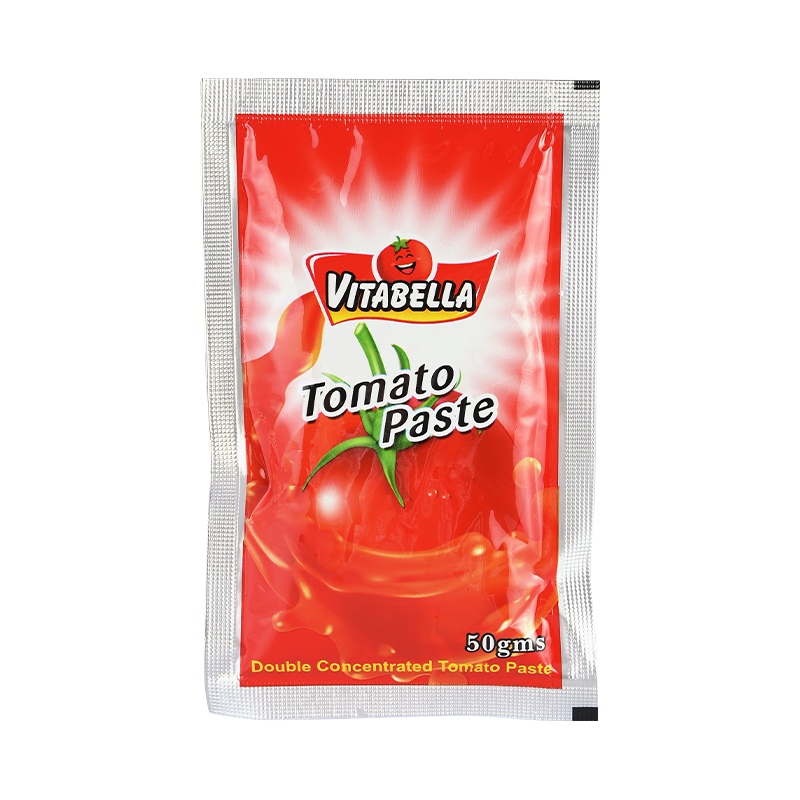 Custom Double Concentrated Tomato Paste Manufacturer, FactoryNingbo Junyoufu Food Co., Ltd is a China double concentrated tomato paste manufacturer and double concentrated tomato paste factory, We s...View Product →
Roasted vs. Regular Tomato Paste: Key Differences
Roasted and regular tomato paste differ in color, flavor, aroma, perceived sweetness, viscosity, and best use, and those differences should drive your purchase decision.
| Attribute | Roasted Tomato Paste | Regular Tomato Paste |
|---|---|---|
| Color | Dark brick red to mahogany | Bright red to deep red |
| Flavor | Caramelized, smoky, sweet-savory | Fresh, tart, bright tomato |
| Aroma | Roasted, nutty, lightly charred | Clean, fresh tomato |
| Sugar perception | Higher due to caramelization | Moderate, naturally tart |
| Viscosity | Thick, sticky, spreadable | Smooth, paste-like, slightly looser |
| Ideal uses | Hearty sauces, braises, pizza, marinades | General cooking and bright tomato dishes |
| Shelf life, unopened | 18 to 24 months | 18 to 24 months |
The most important point is that roasting concentrates and alters flavor rather than simply thickening the paste. If a recipe calls for tomato paste as a background umami booster, roasted tomato paste will noticeably change the character of the dish. In slow-cooked dishes such as stews and meat sauces, that depth is usually welcome; in delicate preparations, regular paste is the safer choice.
Why Roasting Changes Flavor and Color
Roasting changes tomato paste in three measurable ways: it creates new flavor compounds, raises perceived sweetness, and concentrates mouthfeel and aroma.
First, the Maillard reaction produces new flavor compounds from amino acids and reducing sugars, giving the characteristic roasted, nutty, and savory notes. Second, caramelization of fructose and glucose makes the paste taste sweeter even though no sugar is added. Third, the heat drives off water, concentrating acids, minerals, and other taste-active components, which is why roasted paste clings to a spoon and coats the palate more heavily than regular paste.
Color also shifts. Lycopene, the pigment responsible for tomato redness, degrades and oxidizes under prolonged heat, moving the hue from bright crimson toward a deeper orange-brown. This is the expected result of roasting, not a sign of spoilage. Heat management during concentration is the single biggest factor in the final flavor profile, a point explored in detail in our article on the double-concentration process that creates rich tomato flavor.
Best Culinary Uses for Roasted Tomato Paste
Roasted tomato paste is at its best in dishes that benefit from depth and moderate sweetness.
- Pizza and pasta sauces, where it adds a wood-fired, slow-cooked character.
- Stews, braises, and chili, where a spoonful rounds out the broth and helps thicken it.
- Marinades and glazes for grilled meat, where the caramel notes pair well with char.
- Tomato, vegetable, and bean soups, where it deepens the base.
- Homemade barbecue sauces and ketchup, where it can replace some of the added sugar.
For professional kitchens that want the roasted profile without the labor of roasting and reducing fresh fruit, a 400 g easy-open can of double-concentrated tomato paste is a consistent, high-solids base that can be browned briefly in a pan or oven to intensify the roasted character before it is added to the dish.
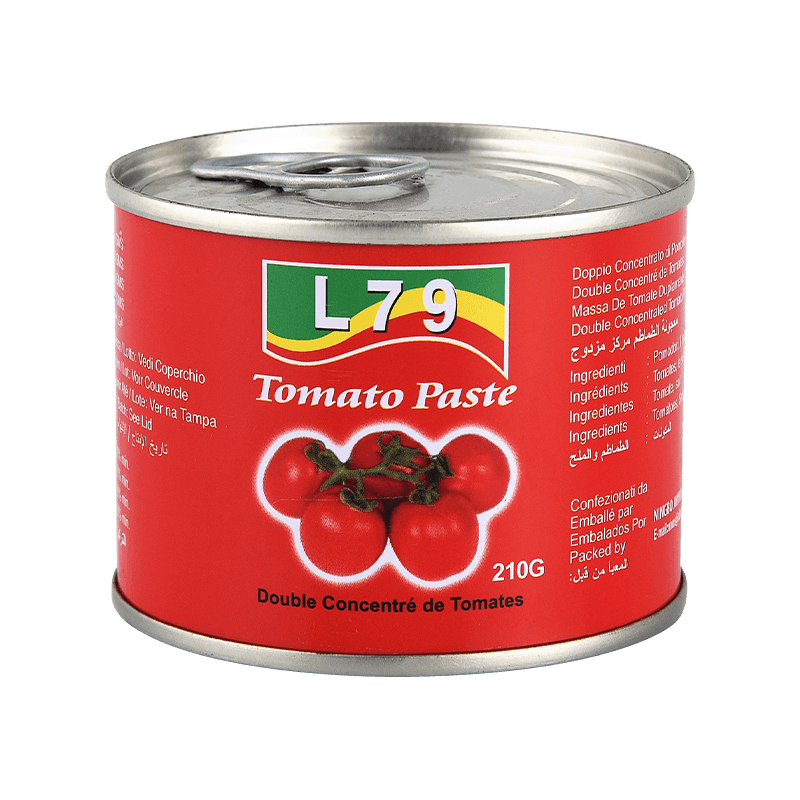 Wholesale 400g Easy open/ Hard open Double Concentrated Canned Tomato Paste SuppAs China OEM/ODM 400g Easy open/ Hard open Double Concentrated Canned Tomato Paste supplier and 400g Easy open/ Hard open Double Concentr...View Product →
Storage and Shelf Life
Unopened roasted tomato paste, whether in cans or glass jars, stays shelf-stable for 18 to 24 months when kept in a cool, dry place. The exact lifespan depends on packaging integrity and the acidity of the batch; a pH below 4.6 keeps the product safe without pressure canning, which is why tomato paste is one of the safer products to preserve.
Once opened, the rules change:
- Refrigerate and use within 5 to 7 days.
- For longer storage, portion the paste into ice cube trays and freeze; frozen cubes last 3 to 6 months without meaningful flavor loss.
- Always use a clean, dry utensil to avoid introducing bacteria or yeast.
- Discard the paste if the surface darkens beyond its normal color or develops an off-odor.
Easy-open cans, such as the 800 g canned tomato paste format for high-volume kitchens, are practical when a recipe calls for more than a spoonful; the remainder can be portioned and frozen.
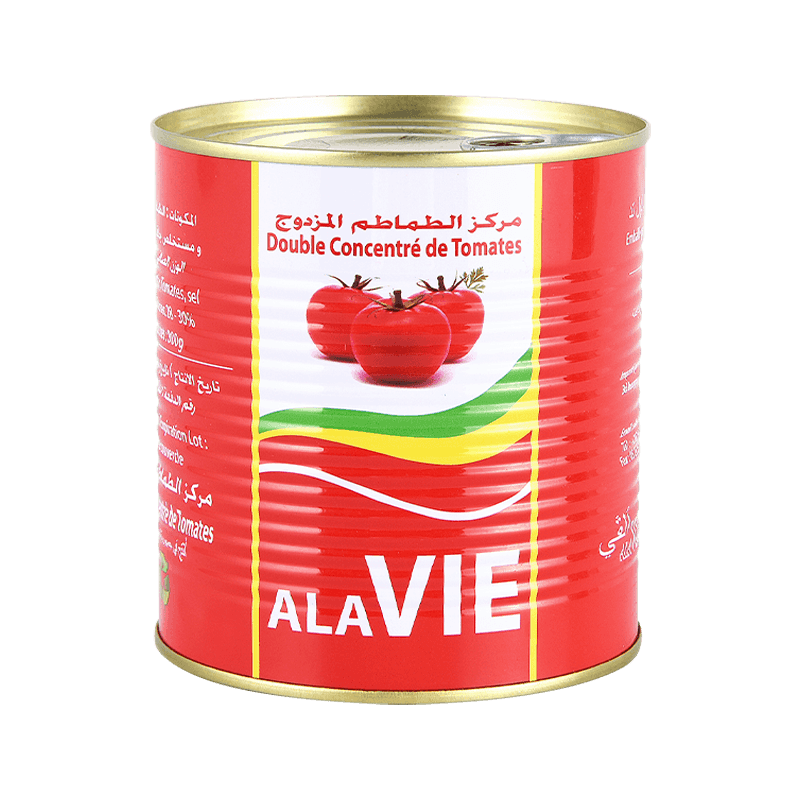 Wholesale 800g Easy open/ Hard open Canned High Fresh Quality Tomato Paste SupplAs China OEM/ODM 800g Easy open/ Hard open Canned High Fresh Quality Tomato Paste supplier and 800g Easy open/ Hard open Canned High Fres...View Product →
What to Check When Buying Roasted Tomato Paste
Whether you buy from a retail shelf or source in bulk, evaluating the product on five points will prevent most purchasing mistakes.
Color should be uniform, a deep red-brown without gray or black patches. Aroma should be roasted but not burnt; a sharp, acrid smell indicates overcooking. Texture should be thick and spreadable, not watery or gritty. For commercial and food-service buyers, Brix is the objective measure: look for at least 28 percent for double concentration. Finally, read the ingredient list. Good roasted tomato paste contains tomatoes, or tomatoes and concentrated tomato paste, and little else. Salt and citric acid are acceptable; added sugar, starches, or artificial colors should raise questions.
Frequently Asked Questions
Can I substitute roasted tomato paste for regular tomato paste?
Yes, but expect a darker color and a deeper, sweeter flavor. For every tablespoon of regular paste, use about three-quarters of a tablespoon of roasted paste, and taste before adding any sugar.
Is roasted tomato paste healthier than regular tomato paste?
They are nutritionally similar. Roasting slightly reduces vitamin C content but can make lycopene more bioavailable because heat breaks down the plant cell walls. Neither product contains fat unless oil was added during roasting.
How long does roasted tomato paste last after opening?
Five to seven days in the refrigerator, or three to six months if frozen in portioned cubes.
Can I make roasted tomato paste at home without straining?
You can blend roasted tomatoes with their skins for a rustic paste. The texture will be less smooth, and the skins will create small dark specks that are harmless but visually distinct.
Why is my homemade roasted tomato paste darker than commercial paste?
Home roasting at high temperatures for a long time darkens the paste more than commercial vacuum concentration, which runs at lower temperatures to preserve color. Darker is not wrong; it simply means a more intense roasted flavor.
 No.1 Tongqianqiao Road, Dongpu Village, Simen Town, Yuyao, Zhejiang Province
  nbms@nbtomato.com
