
 EN
 English
 Français
 中文简体



Two cans of tomato paste sit side by side, same size, same price. One lists "tomatoes"; the other lists "tomatoes, glucose-fructose syrup, salt". No sugar tomato paste is the first can: a paste made from tomatoes alone, with no sucrose, syrup, dextrose, maltodextrin or fruit juice concentrate added at any stage. Every gram of sugar on its nutrition panel is sugar the tomato grew in the field, not sugar a factory poured into the mixer, and that single difference changes how the paste tastes, thickens, browns and keeps.
What follows covers the definition, a 20-second label check, what changes in the pan when sugar is removed, and how to choose a pack and a supplier for a home kitchen, a restaurant or a processing line.
Content
No Sugar Tomato Paste, Defined Plainly
No sugar tomato paste contains nothing but tomatoes, so it carries zero added sugar and no sweetening ingredients of any kind.
A ripe tomato naturally holds roughly 2.5 to 3.5 g of sugars per 100 g, mostly fructose and glucose. Turning tomatoes into paste removes water and concentrates the solids, so a 28-30 °Brix paste usually reads about 8 to 12 g of total sugars per 100 g. All of that is naturally present; stripping it out would mean stripping out the tomato itself. The honest claim on a pack is therefore "no added sugar", "unsweetened", or an ingredient list that says just "tomatoes".
In the European Union and several other markets, "sugar-free" is a regulated term meaning no more than 0.5 g of sugars per 100 g. Tomato paste can never legally qualify. When a pack of paste is marketed as "sugar-free", treat it as a slogan rather than chemistry and check whether the ingredient list backs it up.
Why Sugar Ends Up in So Many Tomato Products
Sugar is added to tomato products for three practical reasons: it softens acidity, it props up diluted tomato solids, and it makes a cheap recipe taste finished.
Tomato paste is acidic, typically sitting between pH 4.0 and 4.4 on the strength of citric and malic acid. Sugar rounds that sharpness off quickly, which is why ketchup recipes can carry 15 to 25 g of sugar per 100 g and still taste more "tomatoey" than sweet.
The commercial reason matters even more on a specification sheet. °Brix measures dissolved solids, and sugar is a very cheap dissolved solid. A formulator can add water and sweetener to a weak paste and still bring the refractometer back to target while the true tomato solids in the can fall. Buy paste by specification alone, and sugar is one of the things that can quietly replace what you paid for.
Sweeteners rarely appear on a label as the word "sugar". Watch for these instead:
- Glucose-fructose syrup, corn syrup, high-fructose corn syrup
- Dextrose, maltodextrin, invert sugar, glucose solids
- Fruit juice concentrate, apple or pear concentrate
- Honey, agave syrup, molasses, rice syrup
The 20-Second Label Check
The ingredient list decides the product; the nutrition panel only confirms what the list already told you.
- Read the ingredient list first, not the front of the pack. "Tomatoes" alone, or "tomatoes, salt", is the cleanest signal available.
- Scan for sweetener synonyms such as those listed above. A paste with syrup in it is a sauce in a paste can.
- Compare total sugars per 100 g only between similar products. Concentrated paste will always read higher than passata because the water has been removed.
- Check whether the claim is "no added sugar" or "sugar-free". The first is achievable; the second is not.
- Read the pack format and the best-before date together, since smaller formats protect quality better for occasional cooks.
| Product | Typical ingredient list | Added sugar | Total sugars per 100 g | Best used for |
|---|---|---|---|---|
| Double concentrated tomato paste, 28-30 °Brix | Tomatoes | None | About 8-12 g, all natural | Sauces, stews, pizza, braises |
| Single strength canned tomato paste | Tomatoes, sometimes salt | None | About 5-9 g, all natural | Everyday cooking, soups |
| Tomato puree or passata | Tomatoes, sometimes salt or citric acid | None | About 3-5 g, all natural | Quick sauces, ragu base |
| Tomato ketchup | Tomatoes, sugar, vinegar, salt, spice | Commonly 15-25 g | About 20-28 g | Dipping, burgers, fries |
| Ready-made pasta or pizza sauce | Tomatoes, sugar, oil, herbs, salt | Often 5-12 g | About 7-15 g | Convenience cooking |
Read across the rows and the pattern is simple: the further a product drifts from plain paste, the more added sugar it usually carries and the less tomato flavour you get per spoonful.
Cooking With Unsweetened Paste: What Actually Changes
Unsweetened paste gives you a deeper, more savoury tomato flavour and a firmer body, but it will not brown or round off the way a sugared sauce does.
Sugar caramelises from roughly 160-170 °C and softens acid on contact. Without it, the paste tastes more direct and the finished sauce sharper. The correction takes seconds: more fat, more salt, and sweetness drawn from ingredients that belong in the dish, such as slow-cooked onion, carrot or a splash of balsamic. Cooks who taste as they go rarely miss the added sugar.
Dilution matters just as much. Double concentrated paste carries about twice the solids of single strength, so thin one part paste with two to three parts water for a passata-like consistency, use it one to one for pizza sauce, and spoon it in undiluted for stews and braises where a long simmer loosens it anyway.
- Pizza sauce and marinara, where tomato should lead and sugar should not
- Stews, braises and soups that already contain sweet vegetables
- Curries and shakshuka, where acidity cuts through fat
- Glazes and toppings, where reducing the paste concentrates flavour fast
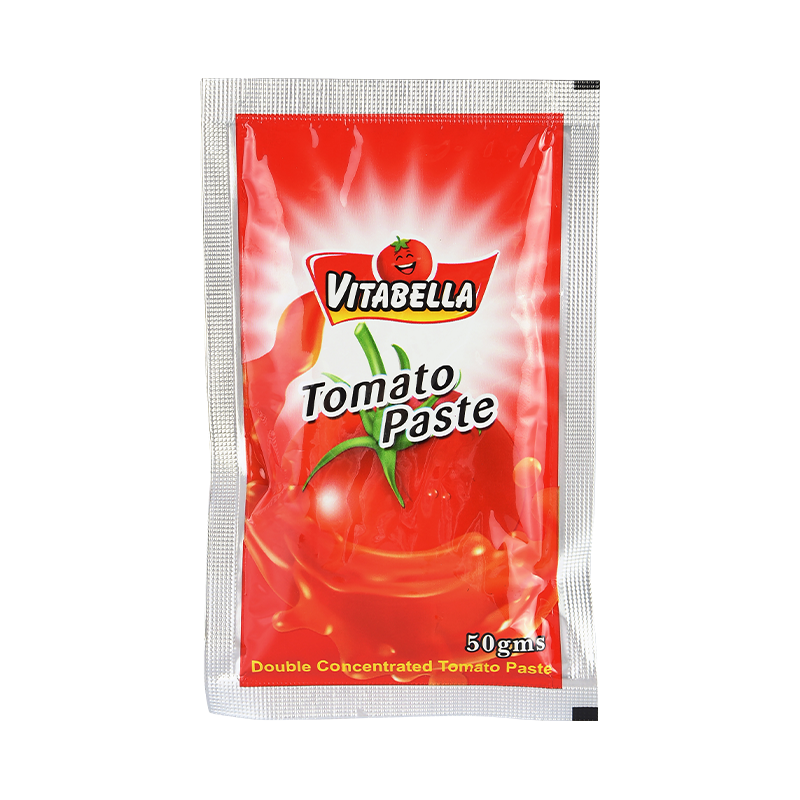 Double Concentrated Tomato Paste for Pizza Pasta and StewsDouble-concentrated paste with rich tomato taste, versatile for pizza, pasta, stews and dilution, with sachet, can, pouch and bottle options.View Product →
Matching the Pack to a Kitchen, a Restaurant or a Factory
Match the pack to your batch size and specification first and to taste second; a 70 g sachet, a 400 g can and a 4,500 g catering can hold the same paste with very different economics.
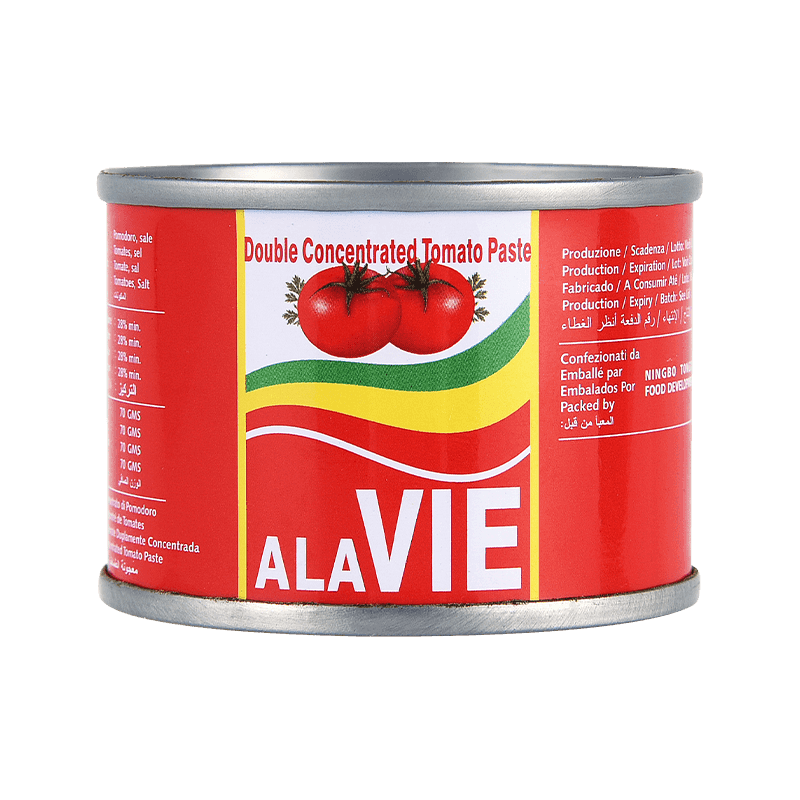
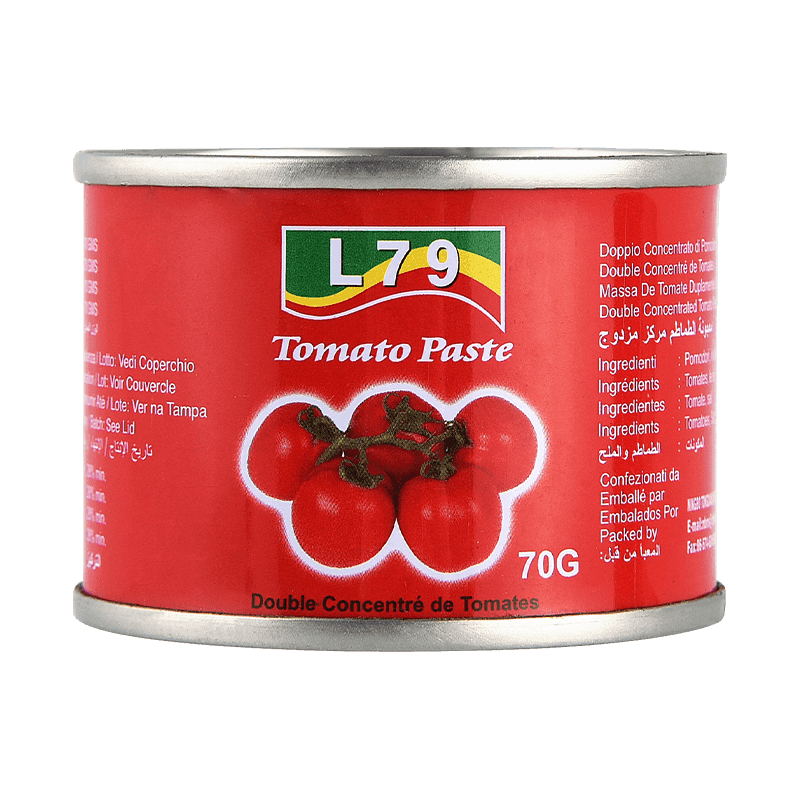
- 50 g and 70 g single-serve sachets suit occasional cooks and catering trays, and they avoid half-used cans.
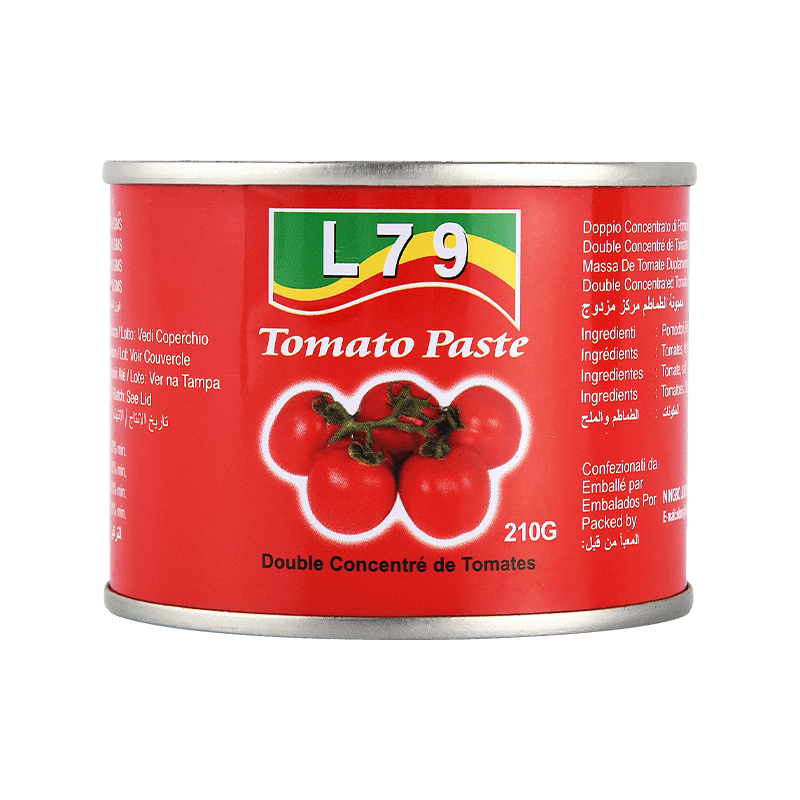
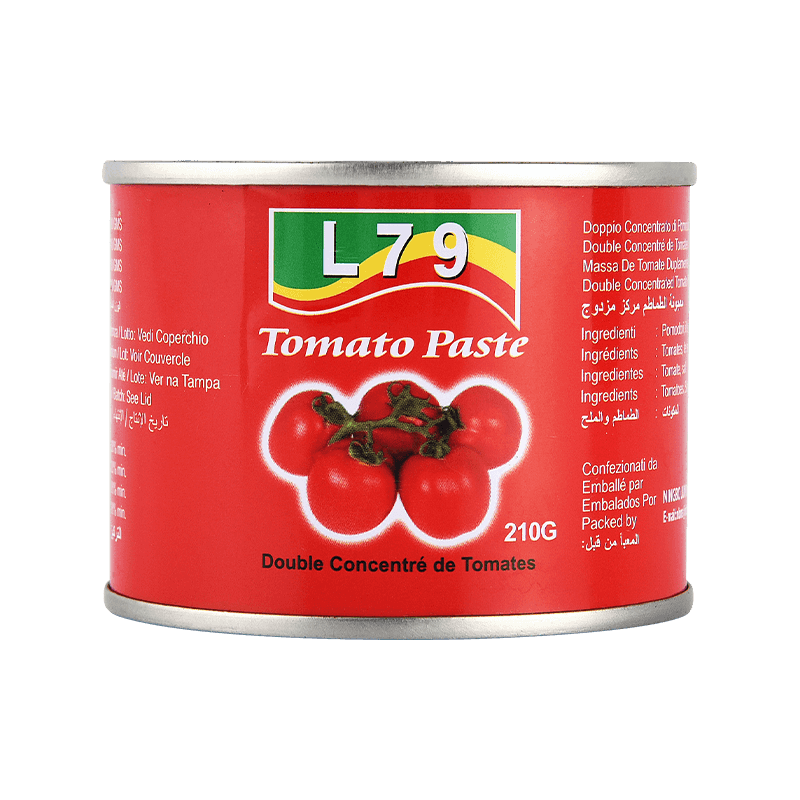
- 198 g, 210 g and 400 g cans are the household workhorses, with easy-open or hard-open lids depending on transport and stacking needs.
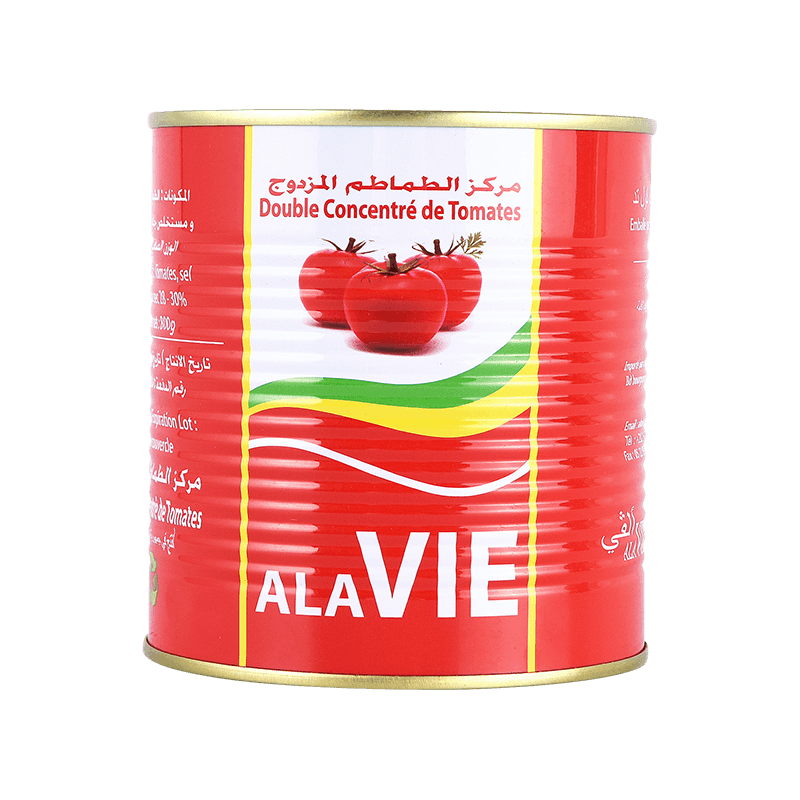
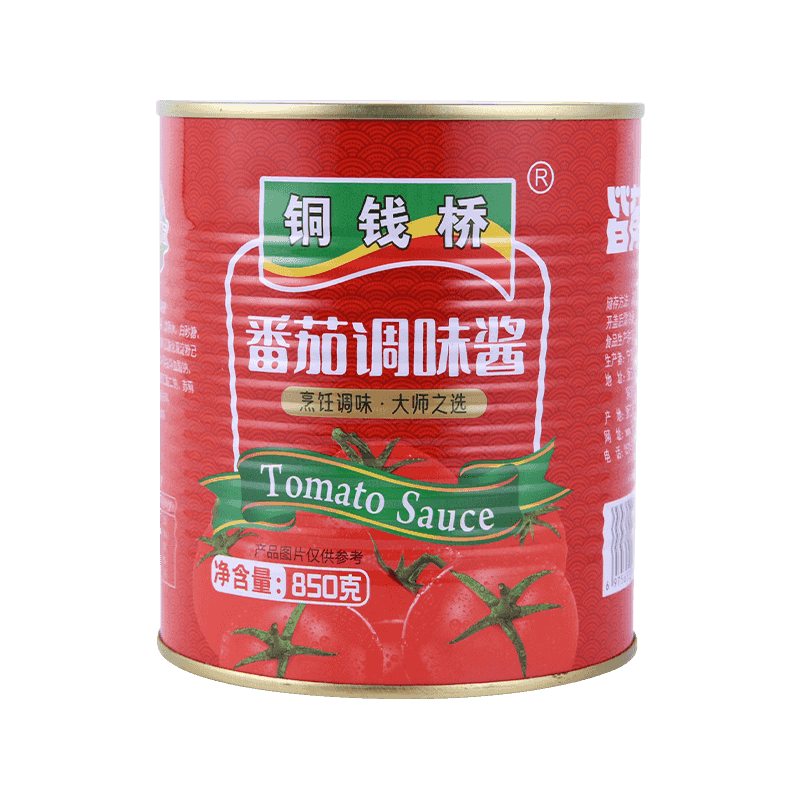
- 800 g and 850 g cans cover larger families, small kitchens and batch sauce production.
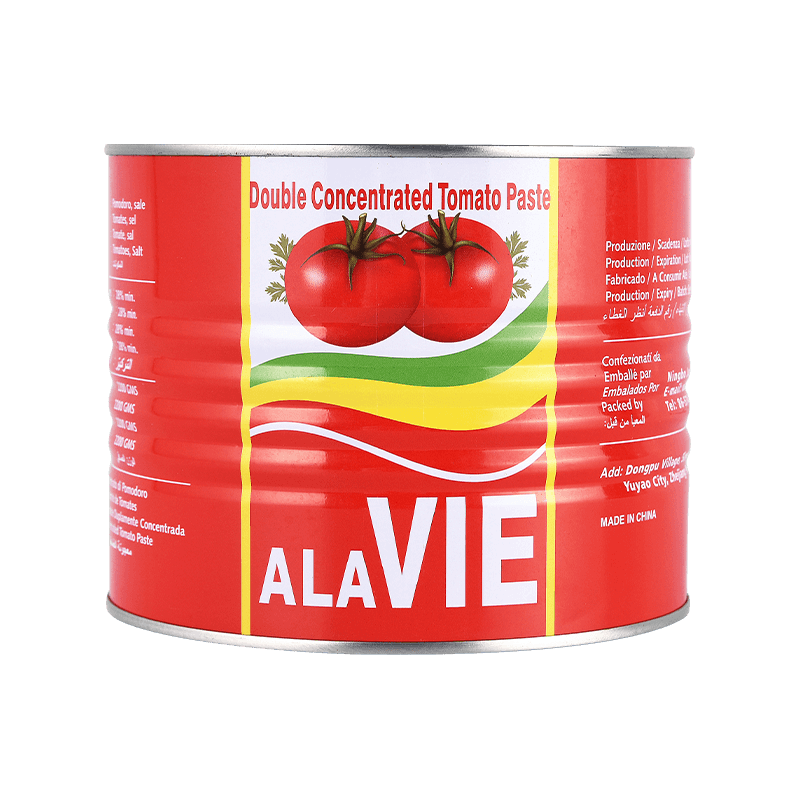
- 2,200 g, 3,000 g and 4,500 g cans are built for food service, pizza lines and catering, where an open can is used within a shift.
- Aseptic bag-in-box and drum formats serve industrial users who repack or process further.
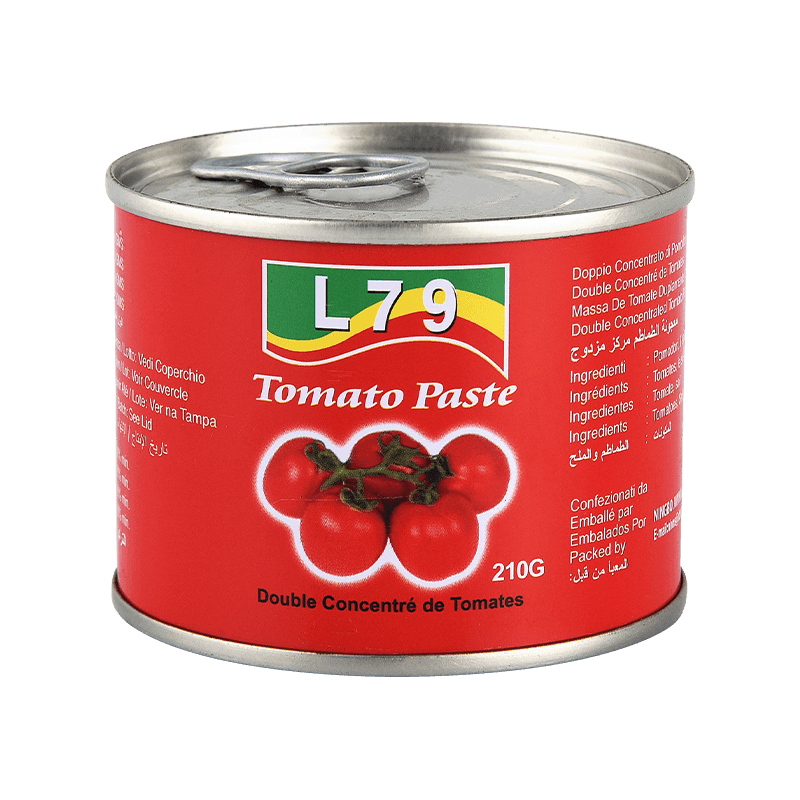 Easy-Open or Hard-Open Double Concentrated Canned Tomato Paste 400gA 400g canned paste with balanced sweet-tart flavor and barrier packaging; easy-open or hard-open lid suits retail, catering and private-label buyers.View Product →
For buyers, the specification matters more than the shelf appeal. Ask for the ingredient declaration, °Brix, pH, consistency, colour reading, microbiological limits and shelf life in writing, plus a statement confirming no added sugar or sweetener. Request a sample from the same production batch you would receive, and taste it both straight from the can and cooked down, because the two impressions often differ.
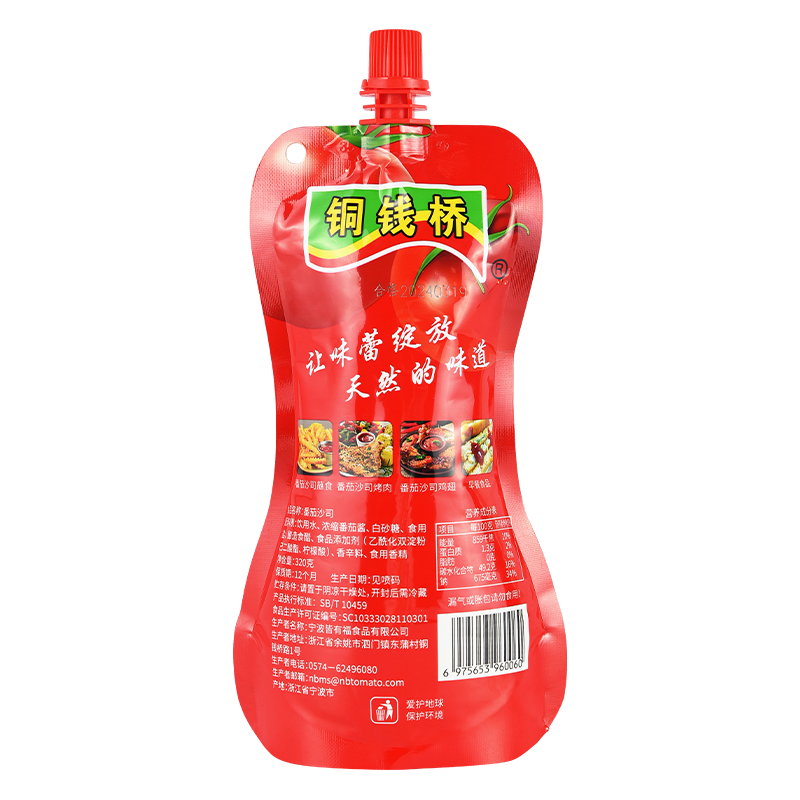 Zero-Fat No-Added-Sugar Sachet Tomato Paste 320g with CapA portable 320g sachet paste with zero-fat, no-added-sugar recipe and natural tomato flavor; suited to health-conscious single-use portions.View Product →
Ningbo Junyoufu Food Co., Ltd. has been processing tomato products since 2006 and runs its own growing, canning and filling lines, which means batch records and specifications can be traced from the field to the finished pack. If you need a no-added-sugar specification, samples or a quotation, our team can confirm current batches and lead times.
Storage After Opening: Where Most Advice Fails
Once opened, tomato paste is no longer shelf-stable; refrigerate it within two hours and plan to use it within about a week.
An open can is the worst container. Transfer the paste into a small glass or plastic container, press the surface smooth, and cover it with a thin film of oil before closing the lid, which limits the oxidation that darkens the top layer. Refrigerated, it keeps around five to seven days. For longer storage, portion it into an ice-cube tray, freeze it, and drop the cubes straight into a hot pan; frozen paste holds for about three months.
Not every change means spoilage. A darkened top layer is oxidation and can simply be scraped off. Fuzzy mould, an off, tinny or sharply sour smell, or bubbling mean the paste should be discarded. Unopened cans and sachets are a different story: kept below about 25 °C and free of dents or damage, most hold their quality for two to three years, so always check the best-before date. More detail on how long double concentrated tomato paste lasts after opening is covered in our industry notes.
Frequently Asked Questions
Does no sugar tomato paste contain any sugar at all?
It contains the sugars the tomato grew, typically 8-12 g per 100 g in double concentrated paste, but no added sugar or sweetener.
Why does unsweetened paste taste sharper?
Nothing masks the citric and malic acid, so the acidity reads more clearly; in rich dishes that sharpness works in your favour.
Can I use it instead of ketchup?
Yes, with adjustments: thin it with a little water and vinegar, add salt, and sweeten only if the dish needs it; the result is less sweet and more tomato-forward.
Is it suitable for low-carb, diabetic or keto cooking?
It is the better choice among tomato products because nothing is sweetened; a tablespoon of paste adds roughly 1.5 to 2 g of carbohydrate, so portions stay manageable.
How can I be sure a supplier's paste has no added sugar?
Ask for the ingredient declaration, a specification sheet listing °Brix and pH, a lab report and a written no-added-sugar statement, then confirm it by tasting the sample straight from the can.
If you take one thing away, judge tomato paste by its ingredient list rather than by the claims on the front of the pack. A paste that says only "tomatoes" is doing exactly what a tomato does, and once you cook with it you will notice the difference in the body of the sauce and in how much seasoning you add yourself.
 No.1 Tongqianqiao Road, Dongpu Village, Simen Town, Yuyao, Zhejiang Province
 nbms@nbtomato.com

